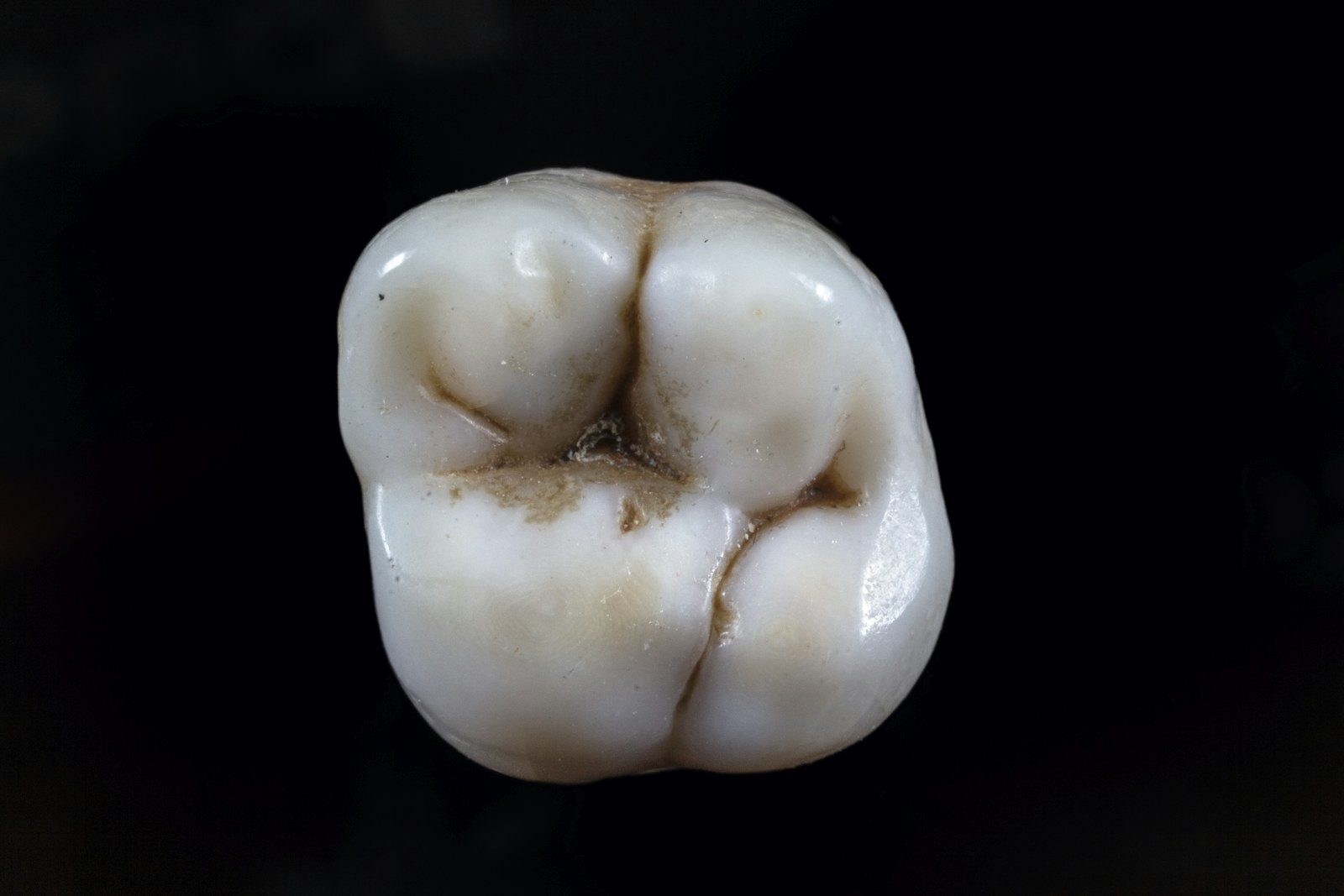
Prosthodontics
Porcelain-fused-to-metal crowns
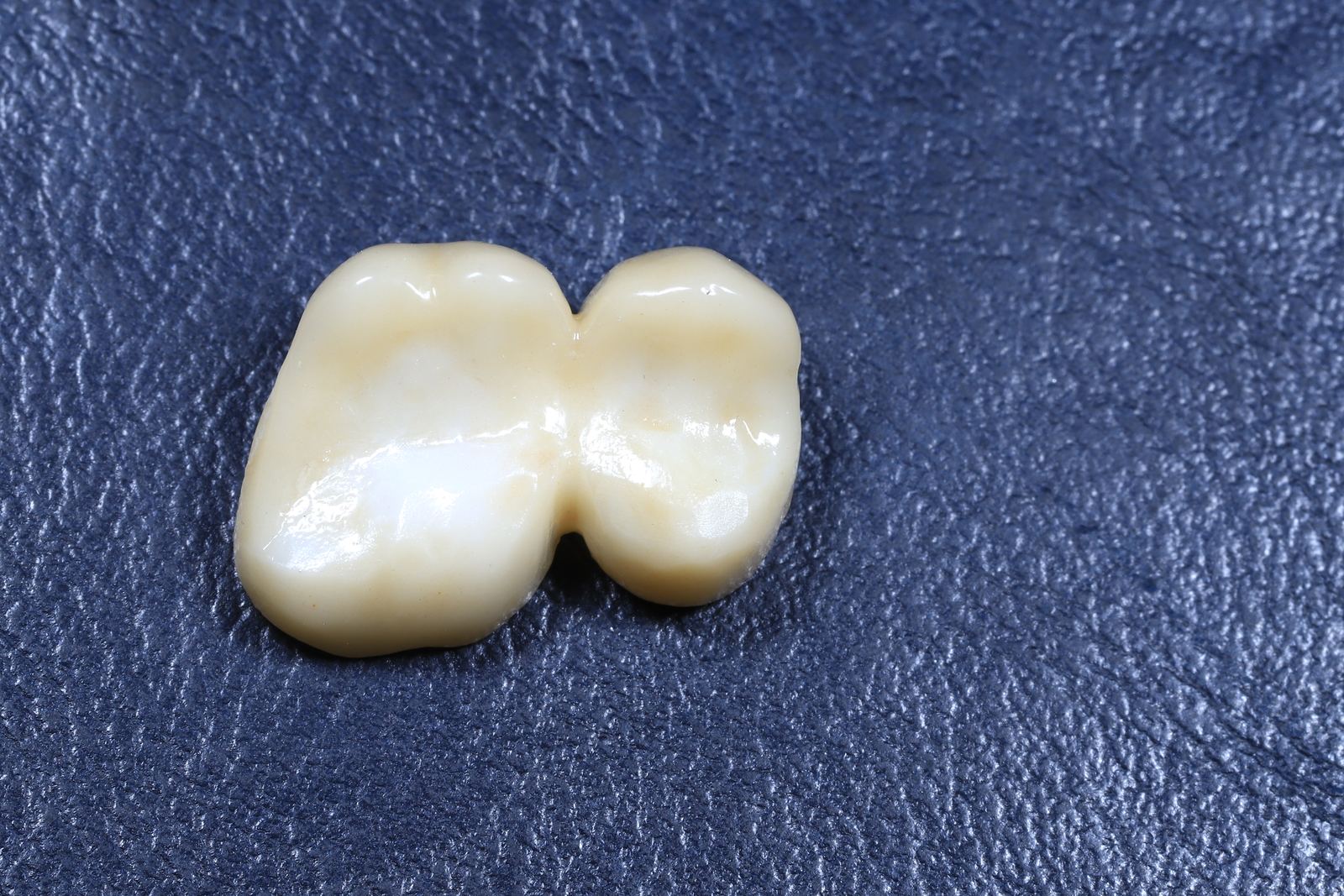
A porcelain-fused-to-metal crown is a metal framework covered with tooth-coloured ceramic. A long-established and affordable way to restore a badly damaged tooth.
- from 1 500 000 UZSstandard porcelain-fused-to-metal
- Metal and ceramicthe framework bears the load, the ceramic veneer provides the colour
- Temporarya crown for the period while the permanent one is being made
01 / What it is
How a porcelain-fused-to-metal crown is built
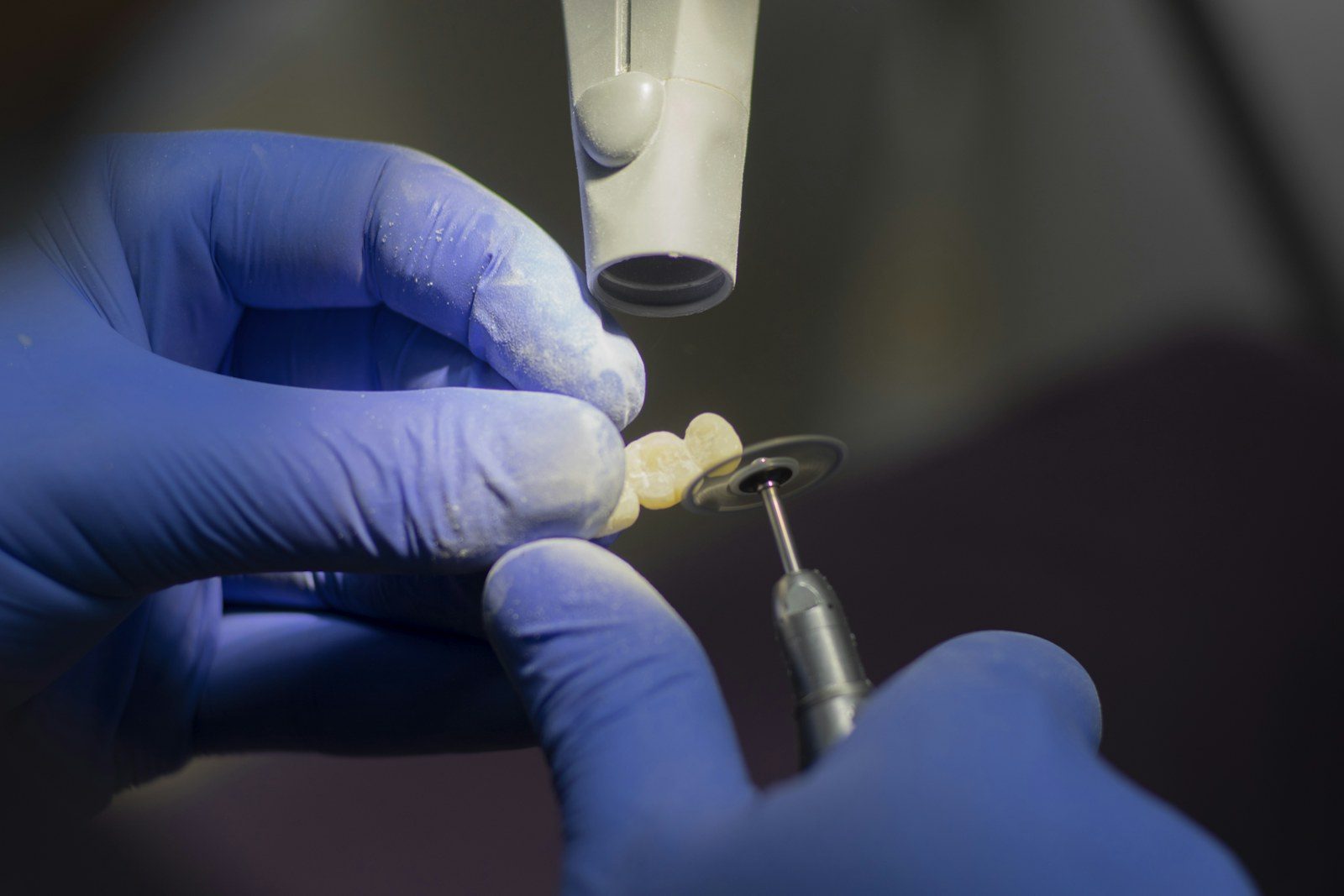
The base of the crown is a thin metal framework that the technician casts from an impression of the prepared tooth. Ceramic is applied over it in layers and the shade is matched to the neighbouring teeth. The framework takes the chewing load, so porcelain-fused-to-metal is used both for single teeth and as a support for a bridge.
The material has limitations worth knowing about in advance. Metal does not let light through, so such a crown looks less translucent than a zirconia or all-ceramic crown. If the gum recedes over time, a dark line may become visible at the edge of the crown. The ceramic veneer may chip under excessive load. If you are allergic to metals, the doctor will suggest a metal-free option.
Who it is for
- The tooth is badly damaged, and a filling or an inlay will not restore it
- A chewing tooth after root canal treatment needs protection from splitting
- Support is needed for a bridge
- A tooth needs to be restored on an implant
- It is important to stay within a limited budget
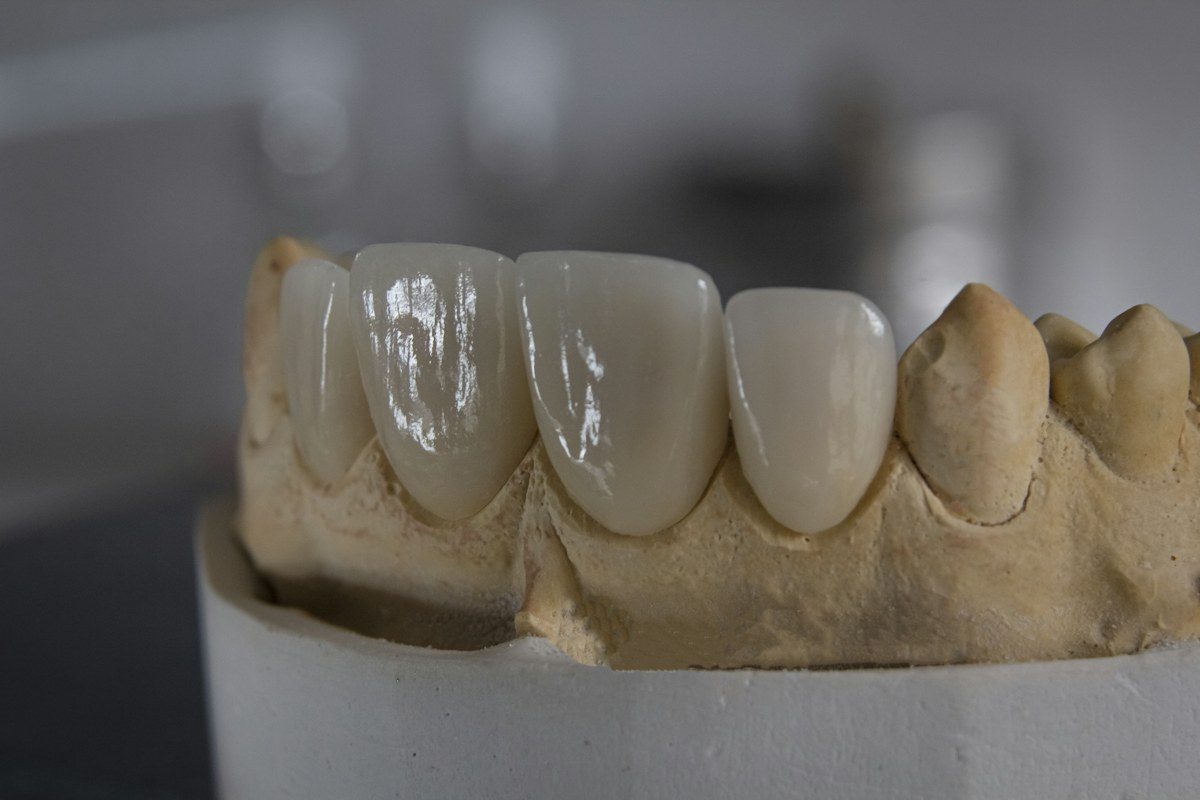
For front teeth and thin gums, the doctor may recommend a zirconia crown: it contains no metal that could show through at the edge.
02 / Stages
How treatment goes
-
Stage 01
Examination and X-ray
The doctor assesses the tooth and roots on an X-ray, checks whether root canal treatment is needed first, and discusses the crown material with you.
-
Stage 02
Tooth preparation
Under local anaesthesia the tooth is shaped to make room for the framework and the ceramic. If necessary, the tooth is built up beforehand.
-
Stage 03
Impressions and temporary crown
The doctor takes impressions, matches the ceramic shade using a shade guide and covers the tooth with a temporary plastic crown.
-
Stage 04
Fabrication and fitting
The technician makes the framework and applies the ceramic. At the try-in the doctor checks the fit, the shade and the bite.
-
Stage 05
Bonding
The finished crown is cemented in place. The doctor explains how to care for it and when to come for a check-up.
03 / Prices
How much it costs
Prices are per crown. Tooth treatment, impressions, the temporary crown and anaesthesia are charged separately. The doctor suggests the type of crown after an examination and an X-ray.
Full price list04 / Questions
Frequently asked questions
Porcelain-fused-to-metal or zirconia — which to choose?
Porcelain-fused-to-metal is cheaper and has been in use for a long time, so it is often chosen for chewing teeth and bridges. Zirconia contains no metal and looks more natural, especially at the gum line, so it is more often recommended for the smile zone. The final choice depends on the position of the tooth, the bite and the budget; it is made together with the doctor.
Will a dark line be visible at the gum?
Right after placement the edge of the crown is usually hidden by the gum. The line may appear later if the gum recedes or becomes thinner. The risk is higher with thin gums and on front teeth — in such cases the doctor may suggest a metal-free crown.
Does the nerve have to be removed before a crown?
Not always. The decision depends on the condition of the tooth, the depth of the damage and how much of the tooth is ground down. The doctor makes it after an examination and an X-ray and explains the reasons.
How do I care for a porcelain-fused-to-metal crown?
The same way as your own teeth: brush with a toothbrush and toothpaste, clean the gaps with floss or an interdental brush, and come for check-ups and professional cleaning. Do not bite hard objects — the ceramic may chip. If the crown has become loose or pain has appeared under it, see the doctor.
Start with a consultation
Consultation and examination by a doctor — 150 000 UZS. The doctor will draw up a treatment plan and tell you the exact cost.