Prosthodontics
Inlays and posts
A badly damaged tooth does not always have to be extracted. If the root is healthy, the tooth is restored with an inlay or a post — on its own or as support for a crown.
- from 600 000 UZScomposite inlay, medium defect
- From an impressionthe inlay is made to the shape of your tooth
- Based on an X-raythe doctor assesses the root and canals of the tooth
01 / What it is
How a badly damaged tooth is restored
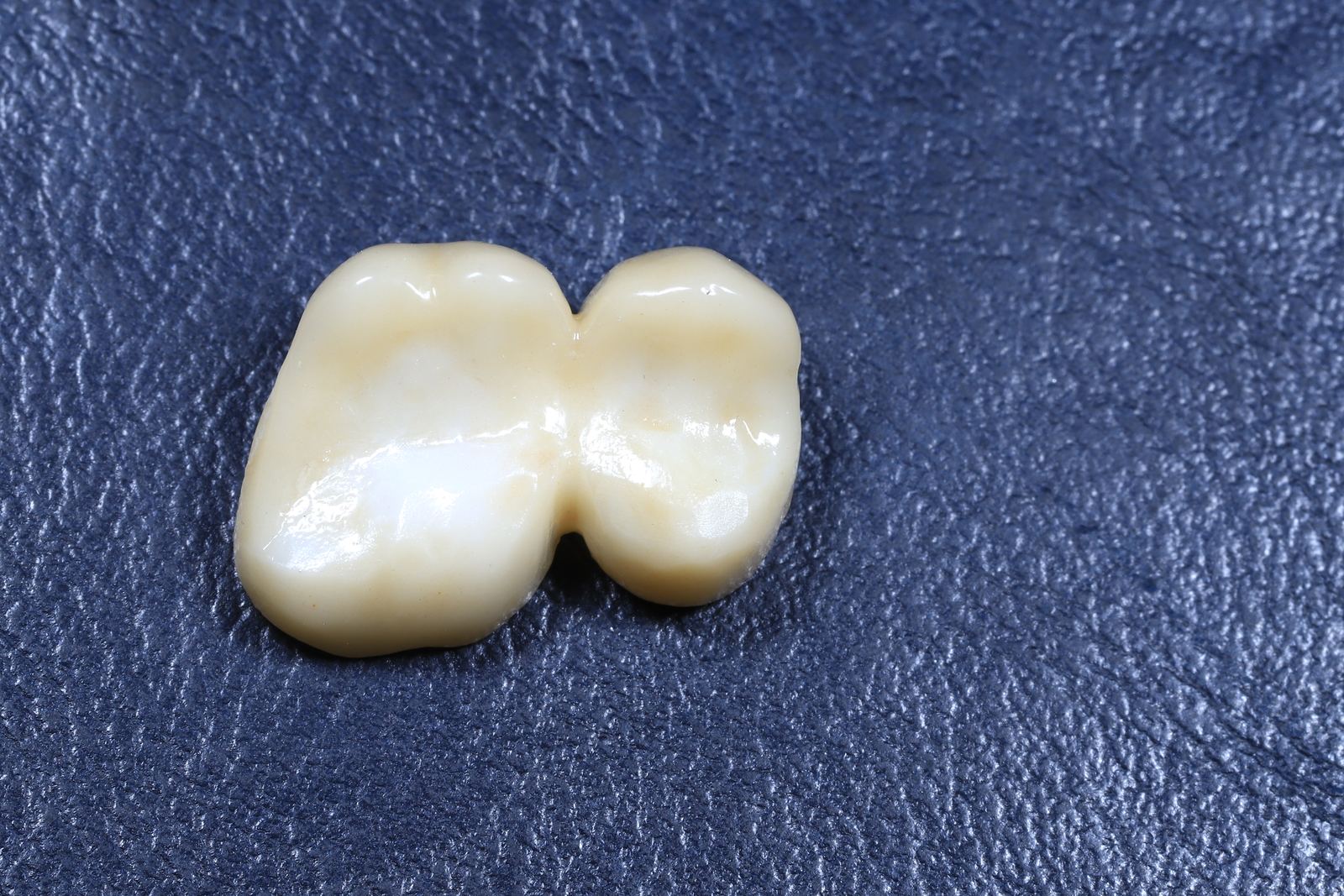
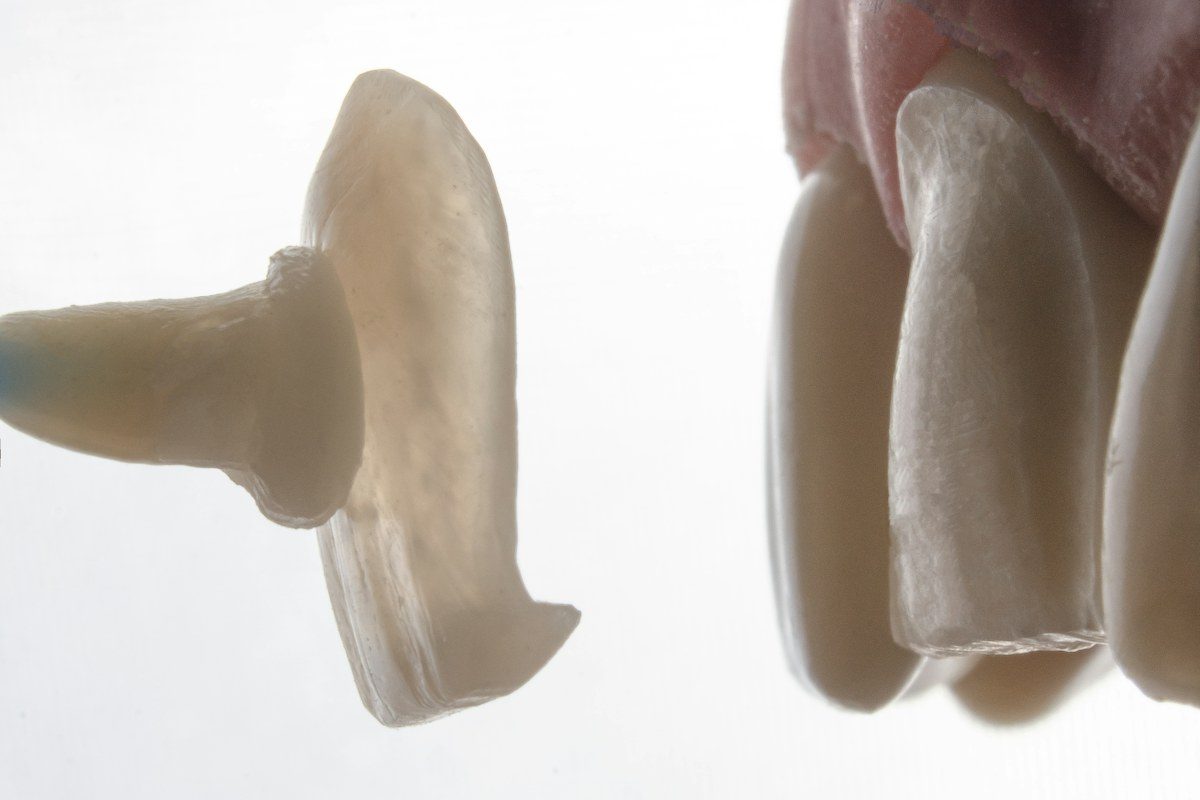
When little is left of the crown of the tooth, an ordinary filling holds poorly: the walls of the tooth are thin and can chip off. An inlay is a one-piece restoration that is made from an impression and fixed in the tooth. It precisely follows the shape of the defect and restores the chewing surface.
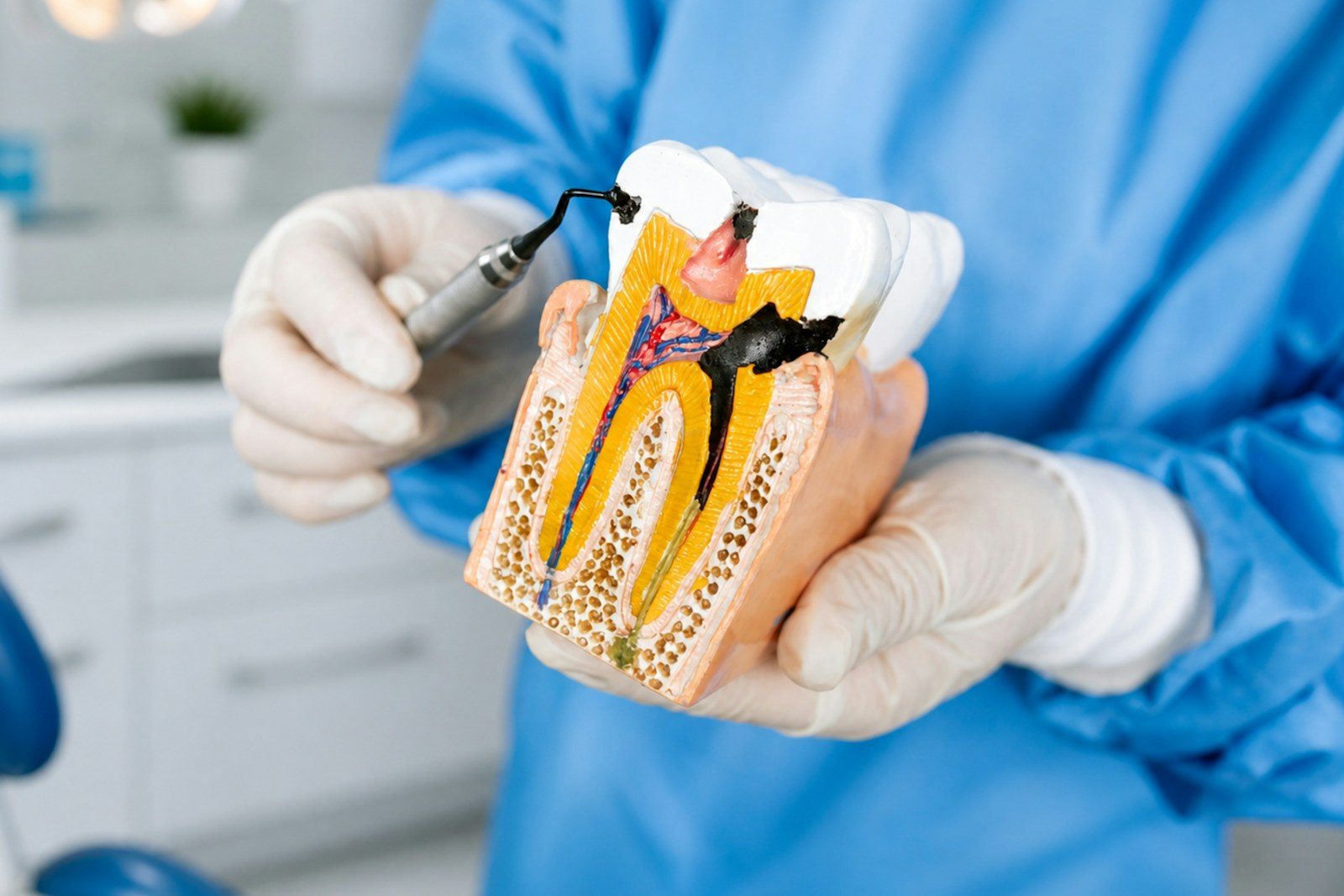
If the tooth is destroyed almost to the gum, support is created inside the root: after root canal treatment, a fibreglass or cast post is fixed in the canal and the core of the tooth is rebuilt on it. As a rule, such a tooth is then covered with a crown. The doctor determines which method is suitable after an examination and an X-ray.
Who it is for
- Most of the crown of the tooth is destroyed, and a filling will not hold
- A large old filling often falls out or chips
- A tooth after root canal treatment: the walls are thinned and need reinforcement
- Only the root of the tooth remains, but it is stable and not inflamed
- Reliable support is needed for a crown
If the root has a crack, is destroyed deep below the gum or the tooth is very mobile, it cannot be restored — the doctor will suggest extraction and options for replacing the tooth.
02 / Stages
How treatment goes
-
Stage 01
Examination and X-ray
The doctor assesses how much tooth tissue is preserved, checks the root and canals on an X-ray and suggests a method of restoration.
-
Stage 02
Tooth preparation
Tissue affected by caries and old fillings are removed. If necessary, the canals are treated or retreated first.
-
Stage 03
Post or impression
For a post-retained restoration, the post is fixed in the canal. For an inlay, an impression is taken and the tooth is closed with a temporary filling.
-
Stage 04
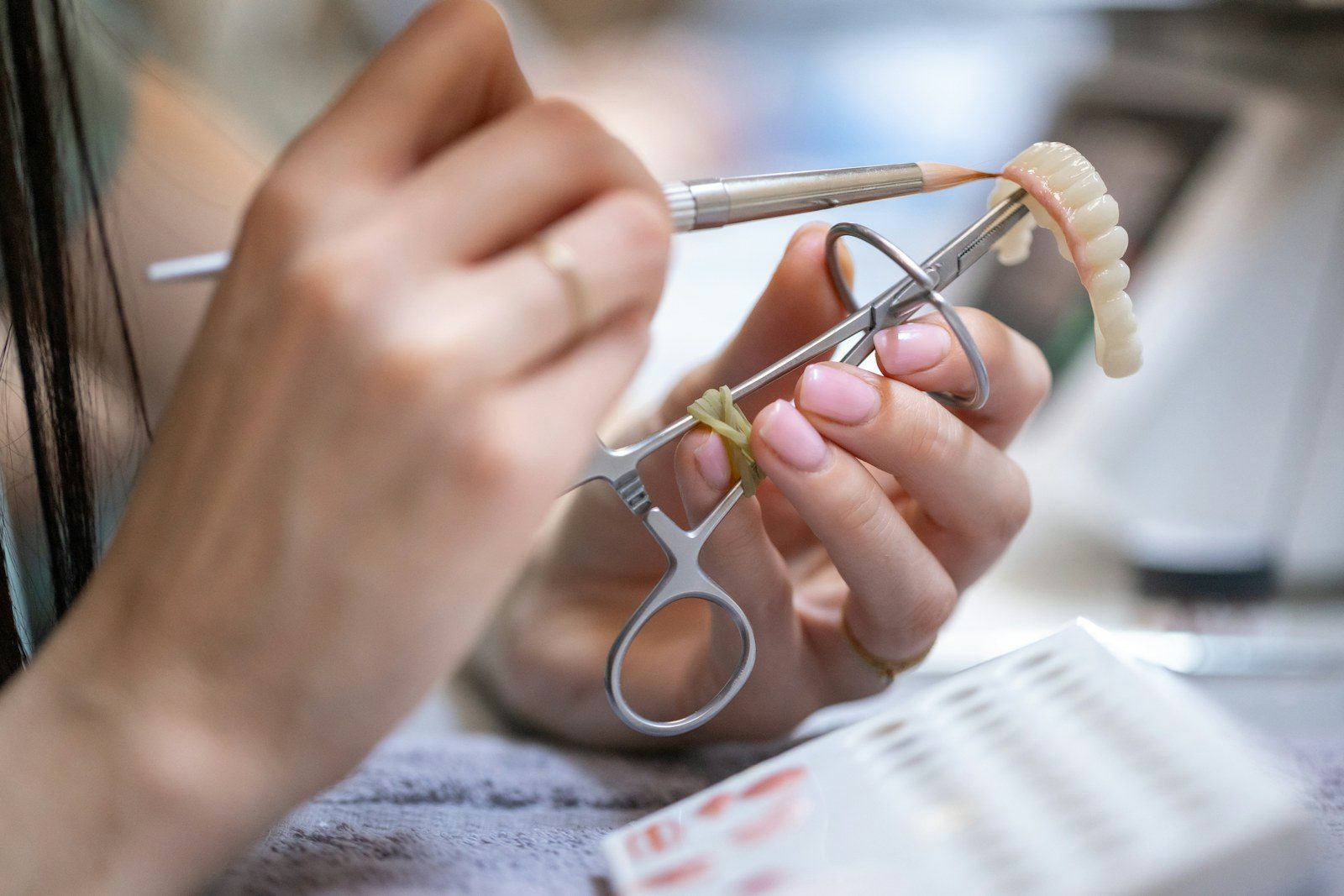
Making the inlay
The inlay is made from the impression, precisely to the shape of the prepared cavity.
-
Stage 05
Fixing and bite check
The inlay is tried in and fixed, and the doctor checks how the teeth close together. If a crown is planned, the next step is making it.
03 / Prices
How much it costs
Prices are per tooth. Anaesthesia, X-rays, root canal treatment and the crown are paid for separately. The doctor determines the type of inlay or post after an examination and an X-ray.
Full price list04 / Questions
Frequently asked questions
How does an inlay differ from a filling?
A filling is shaped by the doctor directly in the mouth, layer by layer. An inlay is made separately, from an impression, and fixed in the tooth as a single piece. With a large defect, this makes it easier to restore the shape of the tooth and the contacts with neighbouring teeth precisely. With small caries an inlay is not needed — a filling is enough.
Which post is better — fibreglass or cast?
There is no universal answer. A fibreglass post is closer to tooth tissue in elasticity; a cast post is made individually and is more often chosen when the destruction is very severe. The doctor selects the option according to the condition of the root, the amount of preserved tissue and the load on the tooth.
Is a crown needed after a post?
Most often yes: a tooth after root canal treatment with a large loss of tissue becomes brittle, and a crown protects it from splitting. If the walls of the tooth are well preserved, a restoration is sometimes enough. The doctor decides this after an examination.
Can a tooth be restored if only the root is left?
Yes, if the root is stable, has no cracks, there is no untreatable inflammation around it and enough healthy tissue remains above the gum. The doctor checks all of this at the examination and on an X-ray. If these conditions are not met, it is more reliable to extract the root and consider an implant or a bridge.
Start with a consultation
Consultation and examination by a doctor — 150 000 UZS. The doctor will draw up a treatment plan and tell you the exact cost.