Surgery
Root apex resection
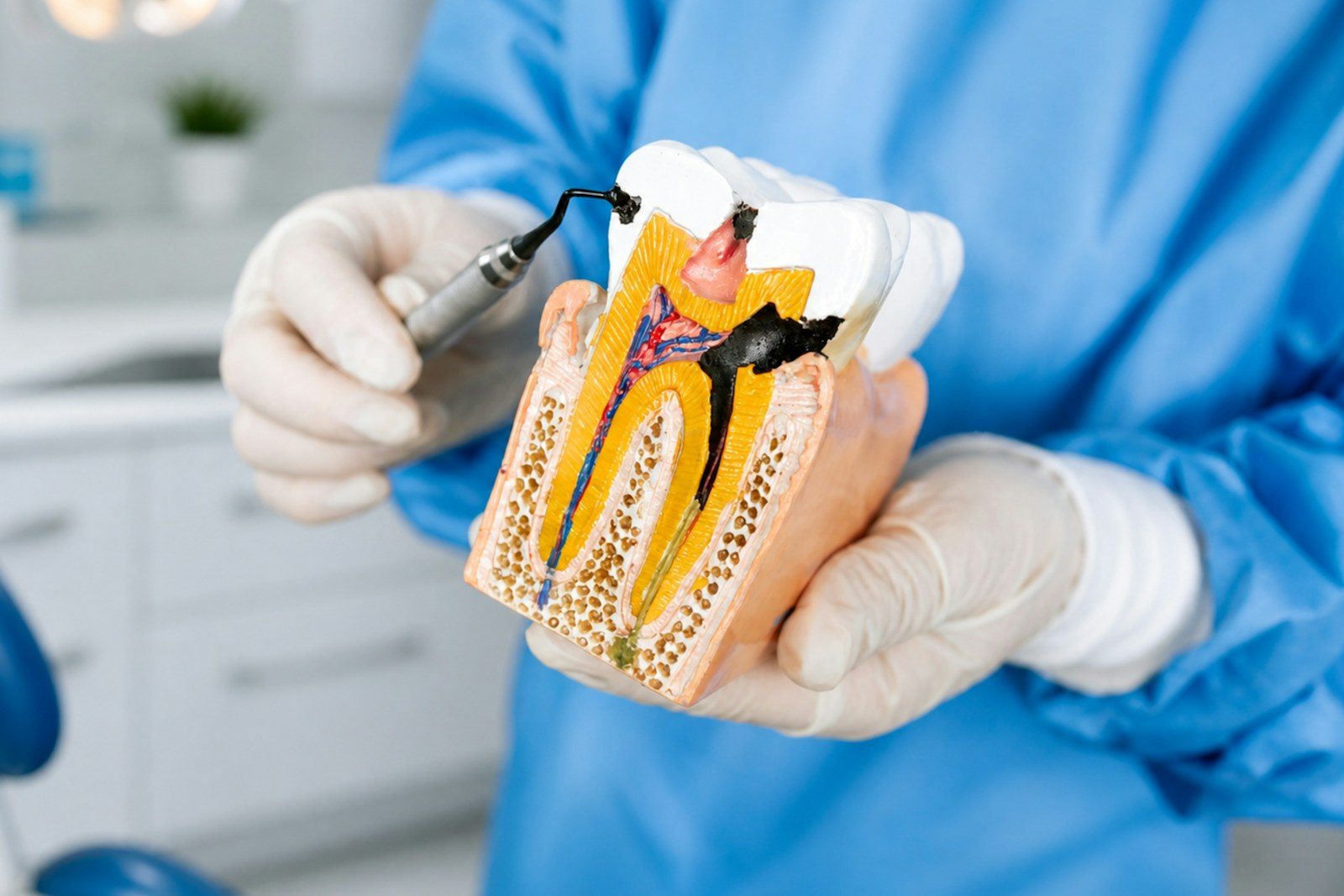
Root apex resection is an operation in which a cyst or granuloma is removed together with the tip of the root, while the tooth itself is kept. It is performed when the inflammation cannot be treated through the root canals.
- from 500 000 UZSresection on front teeth
- The tooth is keptonly the root apex and the focus of inflammation are removed
- From a 3D scanthe doctor assesses the size of the lesion and the position of the roots
01 / What it is
When a cyst is removed surgically
With chronic inflammation, a granuloma or cyst forms at the root apex — a lesion that destroys the surrounding bone and may cause no symptoms for a long time. It is usually treated through the root canals of the tooth. But if the canal is blocked by a post or an inlay, cannot be passed, or retreatment has not helped, the lesion is approached from the gum side.
Through a small incision in the gum and an opening in the bone, the doctor removes the cyst and the root apex and, if necessary, fills the canal from the cut end. The complexity depends on which tooth it is: front teeth have one root and access is easier, while chewing teeth have several roots that lie deeper.
Who it is for
- The X-ray shows a cyst or granuloma at the root apex
- The canal cannot be retreated: there is a post or an inlay in it, and a crown on the tooth
- Root canal retreatment has not eliminated the inflammation
- A fragment of an instrument has remained in the canal, or material has extended beyond the root apex
- A fistula appears on the gum near a tooth treated long ago
If the root has a crack, the tooth is very loose or the cyst involves most of the root, resection will not help — in such cases the doctor will suggest extraction of the tooth.
02 / Stages
How treatment goes
-
Stage 01
Examination and CT scan
The doctor examines the tooth, uses the CT scan to assess the size of the lesion, the shape of the roots and the proximity of the sinus or nerve, and asks about your health and the medicines you take.
-
Stage 02
Anaesthesia
The operation is performed under local anaesthesia. The doctor starts work once the anaesthetic has taken effect.
-
Stage 03
Removal of the lesion and the root apex
Through an incision in the gum the doctor gains access to the root, removes the cyst or granuloma and the root apex, if necessary fills the canal from the cut end and fills the cavity with bone graft material.
-
Stage 04
Sutures
The gum is put back in place and sutured.
-
Stage 05
Advice and follow-up
The doctor explains how to care for the wound and schedules a check-up, suture removal and a follow-up X-ray to make sure the bone is healing.
03 / Prices
How much it costs
Resection prices are per tooth. Anaesthesia and X-rays are charged separately. The doctor determines the extent of the operation and the need for bone graft material after an examination and a CT scan.
Full price list04 / Questions
Frequently asked questions
Does root apex resection hurt?
The operation is performed under local anaesthesia: it relieves pain, but pressure and touch may still be felt. Once the anaesthetic wears off, swelling and soreness are possible — the doctor will tell you how to relieve them.
Can a cyst be treated without surgery?
Often yes: in many cases small lesions shrink after good-quality root canal treatment or retreatment. Resection is used when that route is not possible or has not worked. The doctor determines what suits your case after an examination and an X-ray.
What happens if a cyst is left untreated?
The lesion may not hurt for a long time, yet still grow and destroy the bone around the root. Flare-ups with pain, swelling and a fistula on the gum are possible, and over time — loss of the tooth. So a lesion found on an X-ray is worth showing to a doctor even if the tooth is not bothering you.
What should I do after the operation?
Do not touch the sutures with your tongue or any objects, chew on the other side, avoid hot food and drinks, smoking and physical exertion, and brush the teeth next to the wound gently. The doctor gives the exact recommendations. If the pain gets worse, the swelling increases or the bleeding does not stop — contact the clinic.
Start with a consultation
Consultation and examination by a doctor — 150 000 UZS. The doctor will draw up a treatment plan and tell you the exact cost.